Welcome to the car buying guide for Big Horn MT, designed to help shoppers compare used vehicles, understand financing, and navigate Montana paperwork with confidence. This resource focuses on the way people in Big Horn County actually drive, from highway miles between towns to winter conditions that favor AWD SUVs and capable pickups. Use it to set a smart budget, review inspection tips, and see which features add the most value locally.
Shoppers can reference real market trends for the area on used-car-market-research-big-horn-mt, review current choices on used-inventory, and learn how approvals work on used-car-financing-big-horn-mt or second-chance-auto-financing-big-horn-mt. Whether you are comparing mileage, ownership costs, or drivetrain choices for snow, this guide brings together best practices and local insights so you can make an informed decision on the right pre-owned vehicle for Big Horn MT.
Use this Big Horn MT guide as your checklist from research through registration. Explore common vehicle types for rural routes, questions to ask on a test drive, and ways to protect your purchase long term. For more deep dives, visit blog and learn about our team on about-us. When you are ready to compare options, see used-inventory and past examples on sold-inventory.
Start with total cost of ownership, not just the sale price. Montana has no state sales tax on motor vehicles, but you should plan for title, registration, and plate fees through the state Motor Vehicle Division. Include insurance, anticipated maintenance, fuel for highway and rural driving, and seasonal items like winter tires. For many buyers, a down payment of 10 to 20 percent can help lower the monthly payment and interest charges. If you are building or rebuilding credit, use a modest, comfortable payment target that still leaves room for saving and routine maintenance.
Financing programs in Big Horn County range from prime credit auto loans to flexible options for limited or challenged credit histories. Lenders consider income stability, debt-to-income ratio, down payment, and vehicle selection. If credit is a work in progress, steady income and a realistic vehicle choice can improve outcomes. Review how approvals generally work on used-car-financing-big-horn-mt and explore dedicated solutions on second-chance-auto-financing-big-horn-mt. For other Montana counties, see financing resources for areas like used-car-financing-yellowstone-mt and used-car-financing-cascade-mt.
Prices and availability can vary by county and season. Compare data-driven insights for Big Horn on used-car-market-research-big-horn-mt. If you travel or cross-shop nearby regions, reference comparable insights in used-car-market-research-yellowstone-mt, used-car-market-research-custer-mt, and used-car-market-research-rosebud-mt. This helps you see typical mileage bands, feature sets, and pricing for trucks, SUVs, and sedans common to rural Montana.
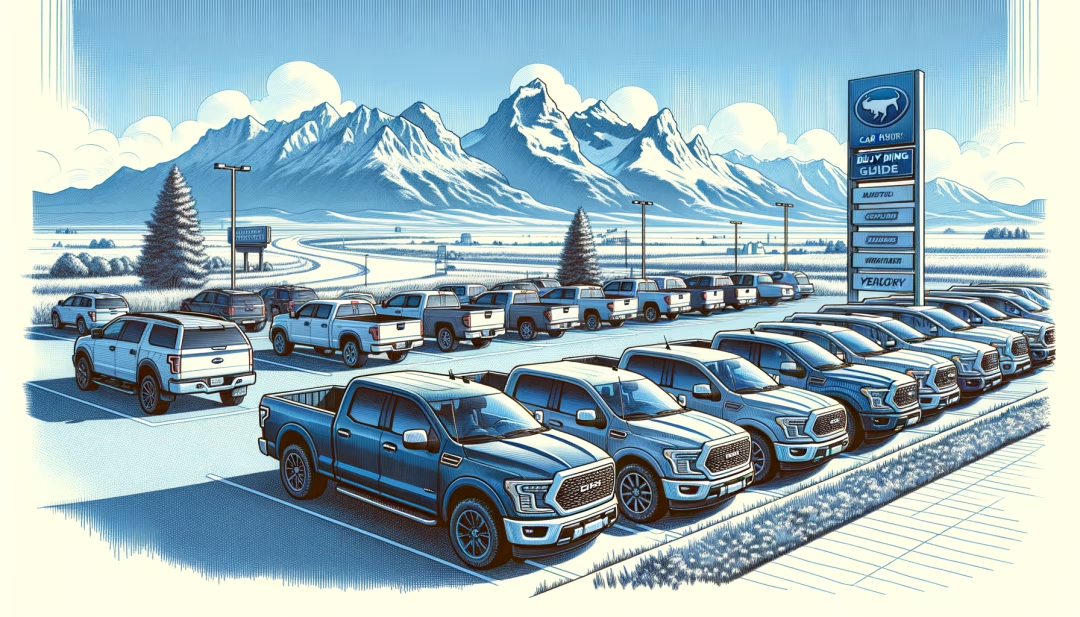
Local driving often includes long two-lane stretches, winter weather, and towing for work or recreation. Many shoppers prioritize ground clearance, stability control, and available 4WD or AWD. If you commute far, consider efficient crossovers or sedans with good highway fuel economy. For ranch, construction, or trail access, half-ton and three-quarter-ton pickups with proper tow ratings and engine braking features may be preferred. If you frequently navigate snowpacked roads, look for vehicles with selectable drive modes, remote start for cold mornings, and all-weather floor liners to protect interiors.
A thorough inspection protects your budget. Focus on safety systems first, then overall condition and service records. In Montana, temperature swings and gravel can accelerate wear on suspension, tires, and windshields. Aim for a test drive that includes highway speeds, a rougher surface, and low-speed maneuvers. If the vehicle has towing history, ask how it was used and check transmission health and brake condition.
Build a short route that simulates your real use. Include a quick start from a cold engine if possible. Drive on a 55 mph two-lane to gauge stability and wind noise. Use a rougher stretch to check rattles. Park on a slight grade and test hill starts. If the vehicle has advanced driver assistance features, verify cruise control, blind-spot monitoring alerts, lane features, and backup camera clarity. When completed, review smells, noises, and heat or AC performance. If anything feels off, ask for a deeper look or an independent inspection.
Bring both sets of keys, service receipts, and a clean interior and exterior to support your trade value. Be realistic about cosmetic items like windshield chips, curb rash, and tire tread. If you have add-ons such as a tonneau cover or upgraded wheels, document them. Market conditions change, so a recent appraisal is more reliable than a months-old estimate. For more education, browse articles on blog.
For a retail sale, your title, odometer disclosure, and buyer-seller information must be accurate. Review the bill of sale, lien documents when financing, and verify VIN on all forms. Registration, titling, and license plates are handled through the state Motor Vehicle Division. Montana requires proof of insurance before driving. Keep temporary registration and proof of purchase handy until your plates arrive. If you are transferring plates, ensure compatibility with the new vehicle class.
Use a simple annual plan: oil and filter changes, tire rotations, cabin and engine air filters, brake inspections, alignment checks after rough-season driving, and coolant or transmission services per the manufacturer schedule. Budget for winter tires or all-weather tires if you regularly drive in snow. Fuel economy will vary with elevation, wind, and winter blends; track your averages and adjust driving habits for best results. A preventative approach can reduce long-term costs and increase reliability on remote stretches.
Depending on mileage and age, you may be eligible for service contracts that cover major components after the factory warranty ends. Consider coverage that aligns with your driving distance and time horizon. Ask for a sample contract, coverage tiers, deductibles, and claim processes. Confirm whether maintenance items are excluded. If the vehicle includes remaining manufacturer coverage, note start and end dates and transfer rules.
Inventory mix shifts across the year. Before winter, demand for AWD and 4WD can rise. After winter, shoppers often prioritize fuel-efficient vehicles or tow-ready setups for summer travel. Use local market data on used-car-market-research-big-horn-mt to see trends and prepare for availability changes. If timing is flexible, compare total cost across a few months.
If you split time across counties, compare guidance in nearby areas: car-buying-guide-yellowstone-mt, car-buying-guide-custer-mt, car-buying-guide-rosebud-mt, car-buying-guide-carbon-mt, and car-buying-guide-park-mt. Each guide reflects local road conditions, popular body styles, and features that retain value regionally.